Clover might just be one of the most underestimated little plants growing all around us (well, also nettle, read here). It doesn’t shout for attention. It’s low to the ground, quiet, and humble—but if you look closely, it’s everywhere. In our fields, by the garden beds, under the apple trees… And as I’ve learned, it’s not just pretty—it’s powerful.


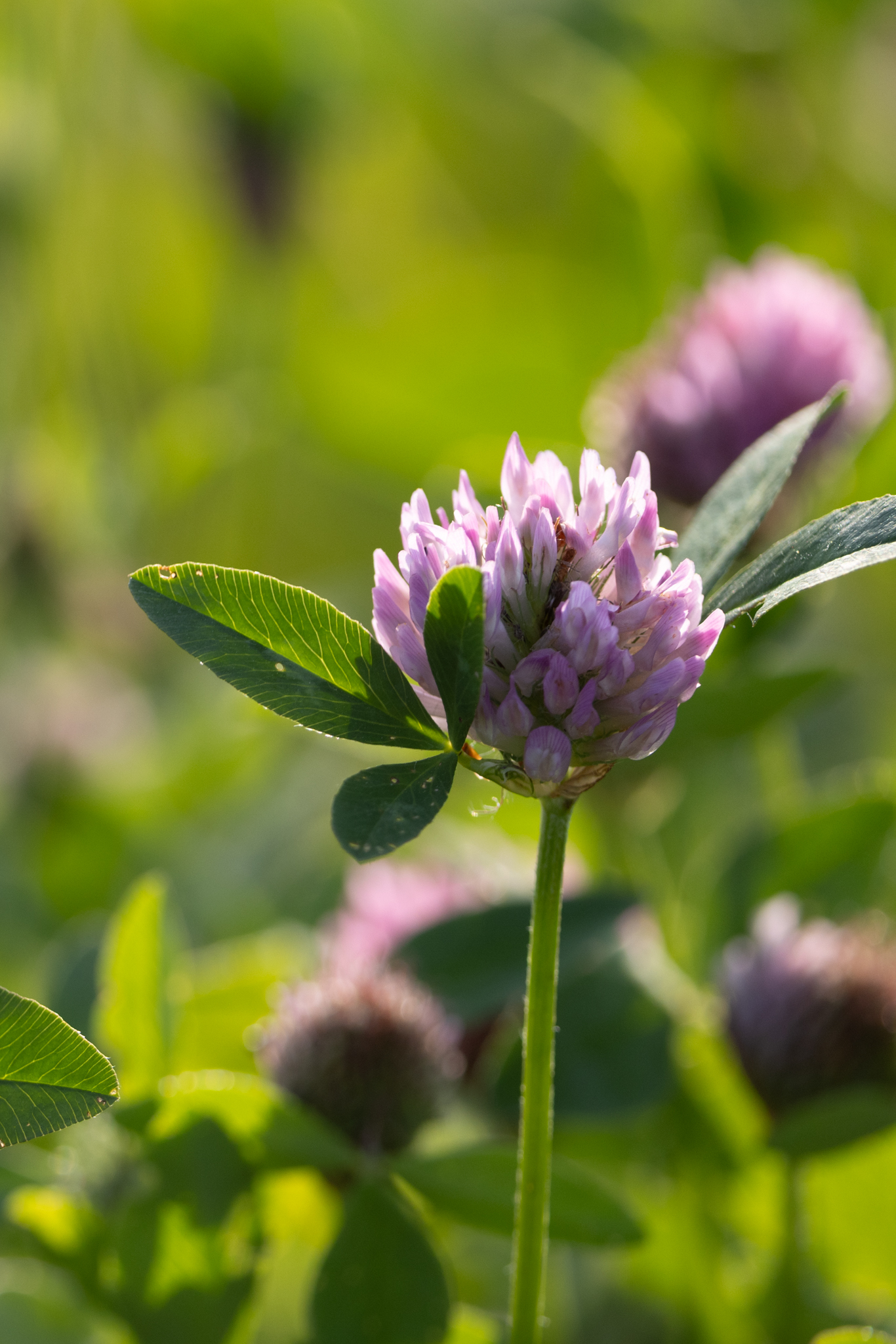
Like nettles, clover is one of those “weeds” I’ve come to appreciate as an ally, not an enemy.
🌱 Not Just for Luck
We’ve all heard of four-leaf clovers bringing luck, but red and white clovers offer much more than just superstition. These little flowers are full of goodness and have long been used in traditional remedies throughout Europe, including here in Latvia.
🌸 How I Use It
I usually start collecting clover blossoms in early summer (now), when they’re full and fresh. I prefer red clover—it’s slightly sweeter and more fragrant—but white clover works too. I dry them slowly, just like I do with nettles, and store them in a paper bag or glass jar.
Later, when the days grow shorter and my energy dips, I make tea with a few dried clover blossoms. The taste is mild, a little earthy, and softly sweet. I often mix it with mint for a calming evening cup.
🌼 Why It’s Worth Keeping
Red clover, in particular, is known for its gentle support to:
- Balance hormones – Especially helpful during PMS or perimenopause.
- Cleanse the body – It’s believed to support the lymphatic system and gentle detox.
- Support the skin – Traditional herbalists have used it for skin conditions like eczema.
- Soothe coughs – Clover tea can help calm dry coughs and irritation.
🌿 Just a Note…
As always, nature is generous, but it asks us to listen and be mindful. Clover is considered safe in moderate amounts, but like with all herbs, it may not be suitable for everyone—especially during pregnancy or if you’re on medication. When in doubt, ask a herbalist or a health professional.
Have you used clover in any way? Or do you still think of it as just a lucky leaf?
Ilze
Discover more from a day in the life of a latvian mom
Subscribe to get the latest posts sent to your email.
 a day in the life of a latvian mom
I’m a big fan of clover. I’ve seeded both the front and back lawns with
it. Red and white, and some purple appeared the other day. It is
drought-tolerant, suppresses weeds, holds the nitrates in the soil, and
the bees love it. Yeah.
Mandy
LikeLiked by 1 person
Nice, Mandy! The white clover is in our lawns as well! I like to keep it there for bees 🙂
LikeLike
I don’t buy into the lucky part but do know that there are edicinal properties in many herbs and flowers. 🙂
LikeLiked by 1 person
Some say there’s no study to support it—but maybe there is no study because no one can get rich from it. It’s free.
Makes you wonder… how many other things are dismissed just because they don’t turn a profit?
LikeLiked by 2 people
Many I’m sure.
LikeLiked by 1 person
I’ve always loved clover, but never knew all of its benefits, thank you for this !
LikeLiked by 1 person
Beth, I hear you on this one! I’ve been diving into herbal remedies myself and came across some interesting finds. Clover seems to be a popular one, but I was really surprised by Lady’s Mantle—it’s not something I would have thought of! Have you looked into it? It seems to have a lot of potential benefits.
LikeLiked by 1 person
I haven’t, but I always enjoy learning
LikeLiked by 1 person
I will write about it when it starts to bloom 🙂 Now it’s so cold and rainy, everything is delayed…
LikeLiked by 1 person
Interesting.
LikeLiked by 1 person
Thank you, it is interesting.
LikeLike
the comment was cutoff when I entered my contact info and I got distracted…. never knew the many benefits of clover, I see it being cut and used for animal feed in our area and I don’t want in our lawn, but it shows up. Have a great day and keep making your days count.
LikeLiked by 1 person
You know, many herbalists believe that when a plant keeps growing near you, it’s not by accident. It’s what your body might need if you just take the time to look into it. Nature has its quiet ways of guiding us. Have you ever noticed other plants showing up?
LikeLike
Now, that is interesting and something to think about. Thank you!
LikeLiked by 1 person
Such an interesting post, I had no idea about the properties of clover… every day’s a school day!!
LikeLiked by 1 person
Thank you! 😊 I felt the same when I first started reading about clover—such a humble plant, yet full of hidden benefits! It’s amazing how much we can learn from nature when we start paying attention. 🌿
LikeLike
Thank you for sharing
LikeLiked by 1 person
You are welcome!
LikeLike
I didn’t know this, Ilze.
LikeLiked by 1 person
🙂 A few years ago, I didn’t know it either! I’m happy to have a few books that are about plants.
LikeLiked by 1 person
We mostly have white flowers on clover.
LikeLiked by 1 person
The white ones we have are short and grow in the lawn. Haven’t seen one in a wild field full of wild flowers… Interesting.
LikeLiked by 1 person
Very interesting to know! Like you said, it’s important to be careful with medication and dosages. But I’m still curious and will ask my doctor about it.
All the best,
Ilze.
Marc
LikeLiked by 1 person
It’s best to consult a doctor, preferably one who’s also an herbalist or at least knowledgeable about herbal remedies. And remember, this is free, so not sure doctors will approve 🙂
LikeLiked by 1 person
Until reading this I had just thought of it as a lucky leaf. Thank you, Ilze
LikeLiked by 1 person
Can you imagine? Knowledge of plants was everyday wisdom for our ancestors—something they relied on and passed down through generations!
LikeLiked by 1 person
When I was growing up in the suburbs of New York, European white clover (Trifolium repens) grew in everyone’s lawn. It was a fact of life, and no one ever told me then that the ubiquitous clover wasn’t native to America.
https://www.newyorkalmanack.com/2023/04/clover/
LikeLiked by 1 person
Exactly! Many plants we now think of as “native” or “normal” in North America were actually brought over by European settlers—clover, dandelions, even apples. It’s fascinating how these plants have adapted and become part of the natural landscape in a completely new place.
LikeLike