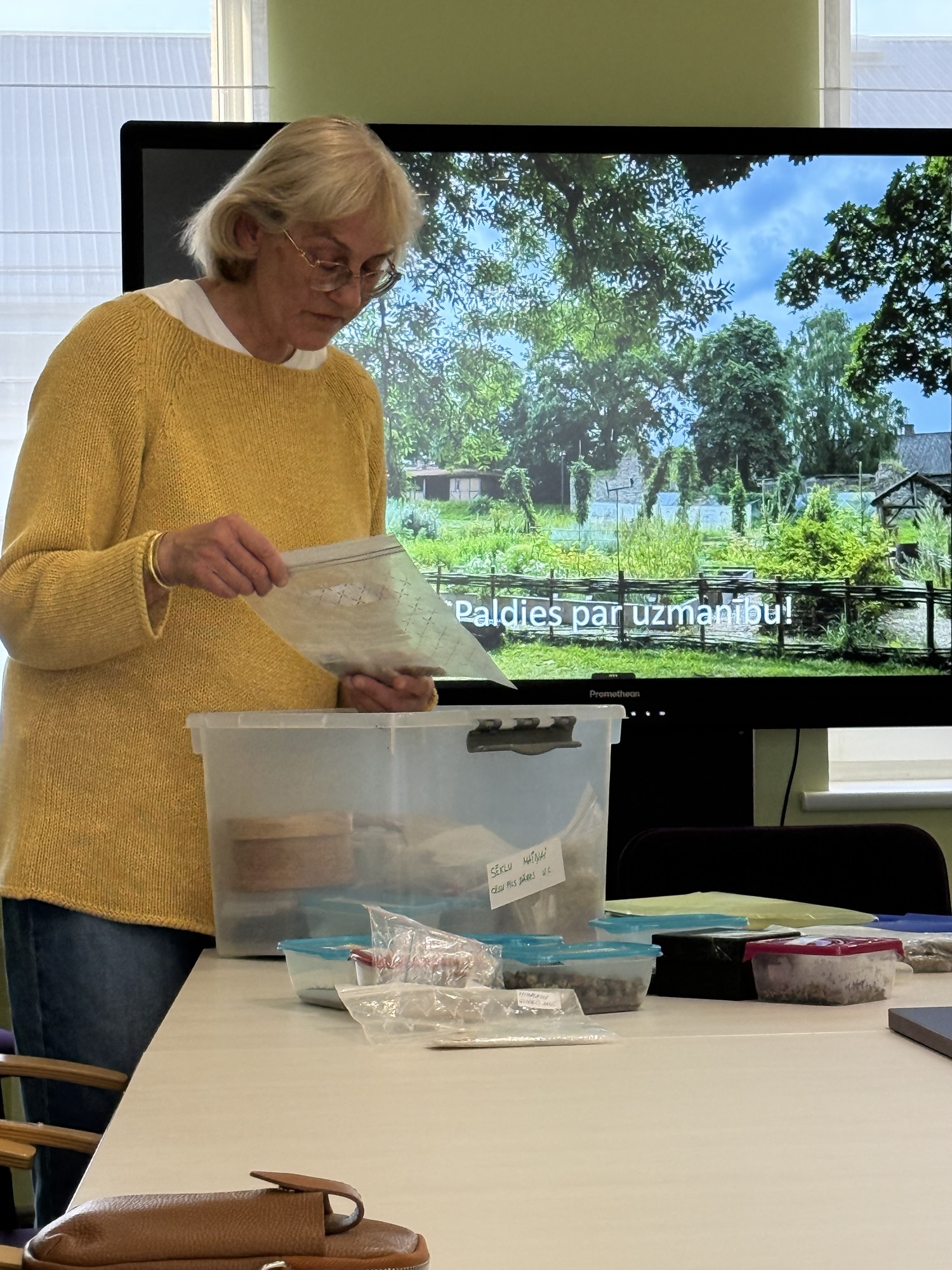
I was lucky enough to spent some time with Līga from Cēsis Medieval Castle garden. It was two-hour lecture about raised beds and kitchen gardening and seed swap. It all happend in Gulbenes Library.
And somehow, it felt like a piece of the Cēsis Medieval Castles kitchen garden had travelled to us.
Līga Eglīte’s kitchen garden at the Cēsis Medieval Castle is a carefully reconstructed 16th-century garden based on historical research, not modern design trends. It consists of long, raised beds framed with woven hazel branches, arranged simply for function and sunlight rather than appearance.The soil is built entirely from natural, locally available materials like manure, ash, compost, and plant waste, creating a self-sustaining system.
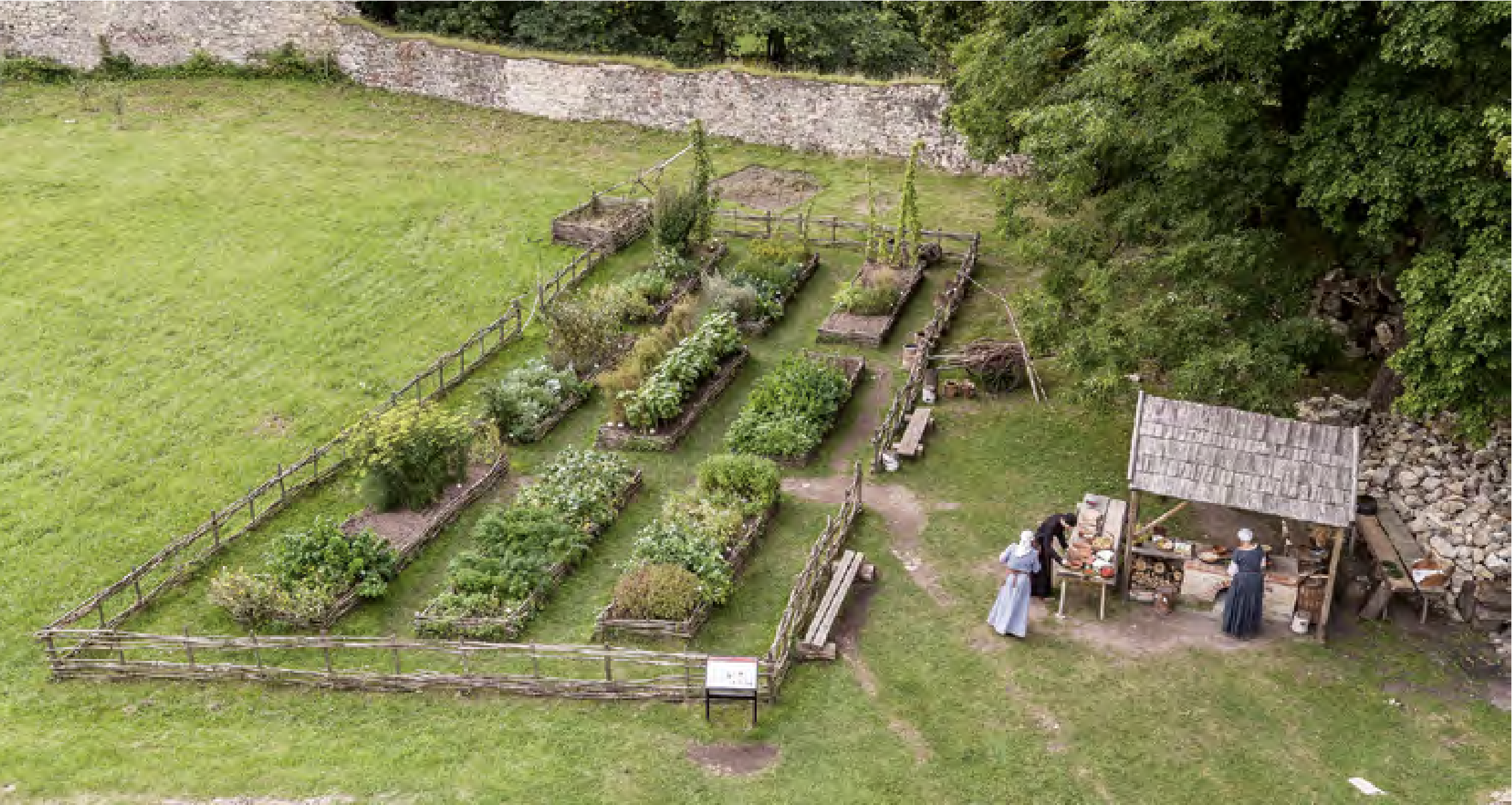
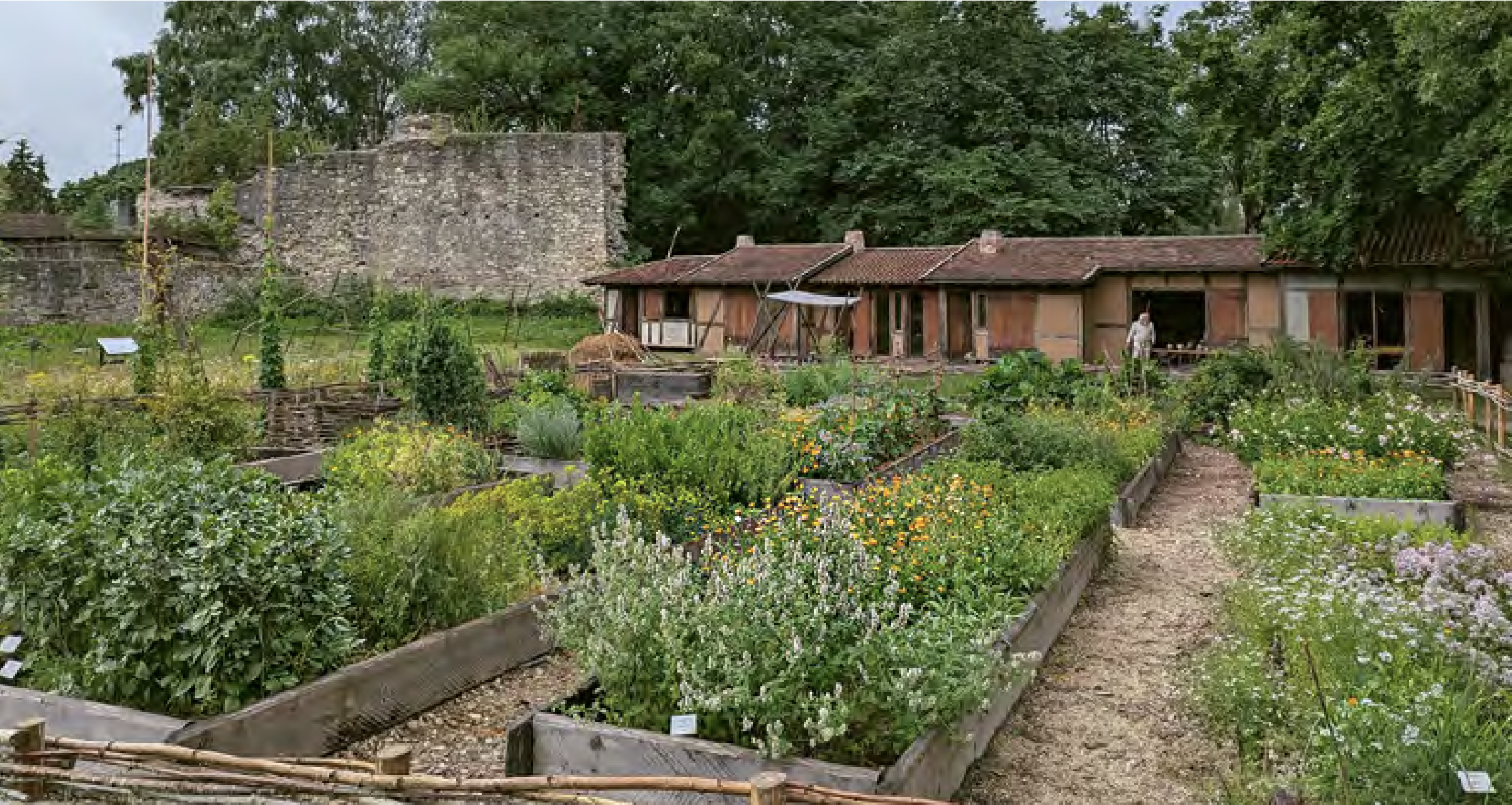
Plants are grown in mixed combinations so they support, protect, and strengthen each other instead of being planted in neat single rows.Overall, it is a closed, living system where nothing is wasted, and everything returns back into the garden.
I’m impressed! She spoke calmly, simply, without trying to impress. Just sharing what she knows from doing. And what she shared stayed with me.
The seeds offered alongside Līga Eglīte’s work are not typical commercial varieties, but old, open-pollinated cultural seeds connected to historical growing traditions. Many come from collectors, research institutes, and heritage gardens linked to the Cēsis Medieval Castle, where preserving plant diversity is part of the mission.
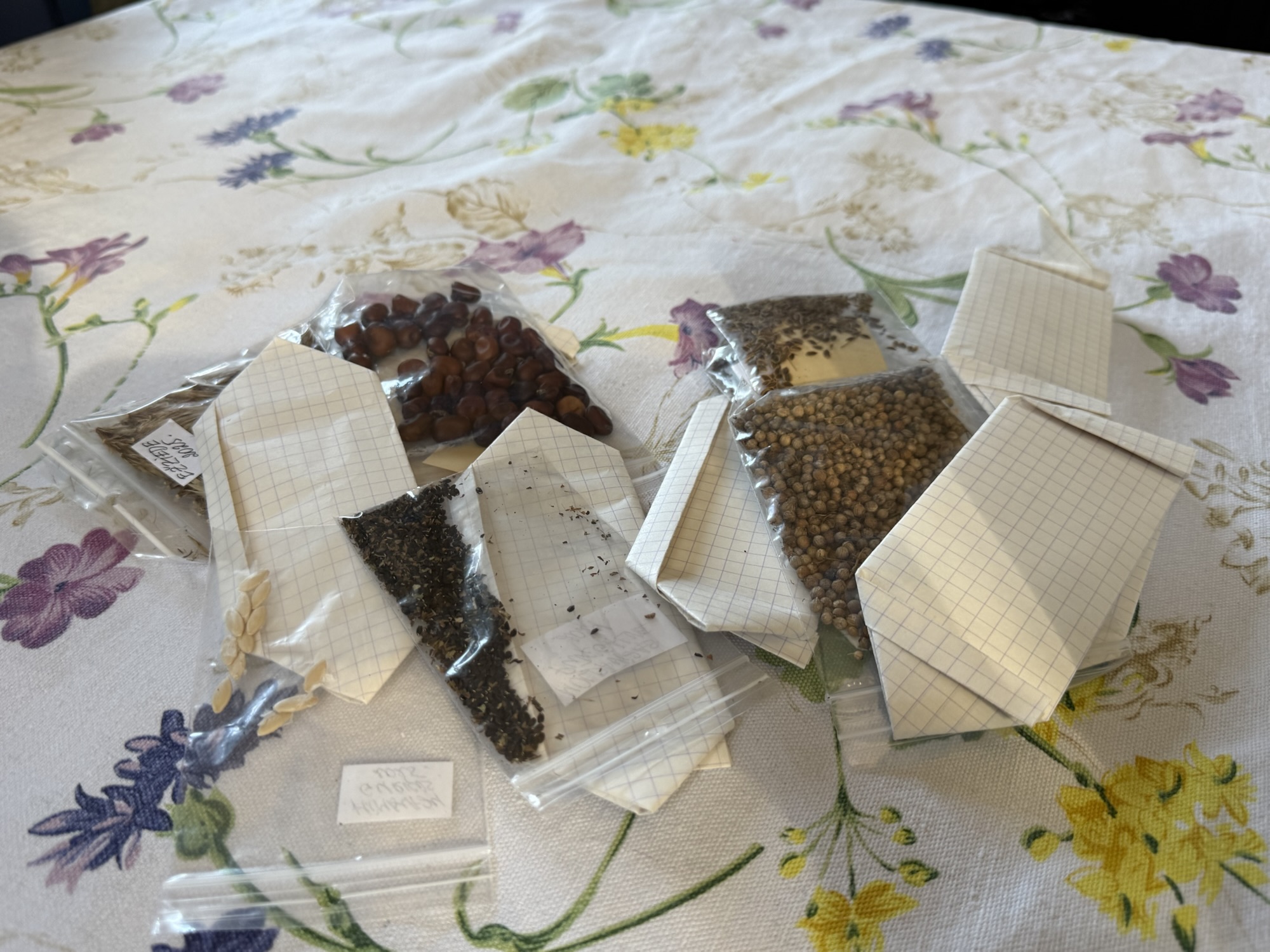
These seeds are valued not for perfect appearance, but for taste, resilience, and the ability to be saved and replanted year after year.
I don’t have such seeds to share, so I was happy to get them for small donations!
Taking them feels less like buying seeds, and more like being trusted to continue something that has already lived through many seasons.
I hope I can carry them further!
Ilze
Discover more from a day in the life of a latvian mom
Subscribe to get the latest posts sent to your email.
 a day in the life of a latvian mom
That is so interesting! I’m into “companion planting” and mix herbs with
flowers/shrubs. That must have been really enjoyable.
LikeLiked by 1 person
You would have loved it then! What you’re doing sounds very close to what Līga described — just without calling it anything fancy 😊
She didn’t even use the term companion planting, but the idea was exactly that — letting plants support each other naturally, the way they would have grown together historically.
Do you mostly go by experience when mixing herbs and flowers, or do you follow certain combinations?
LikeLike
It’s been a long while since I did any garden work, but I always planted marigolds with tomato plants and never had any disease. I found out about it from the internet I think. I just think herbs look and smell nice wherever they are.
LikeLiked by 1 person
Yes! I planted tomatoes with calendula and they were huge 🙂
LikeLike
I am certain that with your thinking the seeds have truly landed in the right place! A fascinating experience for you . . . good luck! Am reposting this to a lady at he moment gardening on the fringes of Melbourne who thinks very much in a similar manner!
LikeLiked by 1 person
Thank you — that means a lot to me. It really did feel like something meaningful to be part of, even in a small way.
And how lovely that you’re sharing it further! I wonder how different (or similar) gardening feels on the fringes of Melbourne compared to here — especially with such a different climate.
Does your friend also work with older or saved seeds, or more with what’s locally available there?
LikeLiked by 1 person
Yes she does – I’ll send you a few photos when I get around to it – you two think very much the same and I did send your letter over. Lovely to learn from both of you 🙂 !
LikeLiked by 1 person
🙂 Thank you Eha! It’s nice to have such friends online!
LikeLiked by 1 person
My kind of day, Ilze. This looked exciting, and now it’s time to plant.
LikeLiked by 1 person
Thank you, Mary! No, it’s time to wait! 🙂 The hardest part! Cause last frost date here is end of May…
LikeLike